
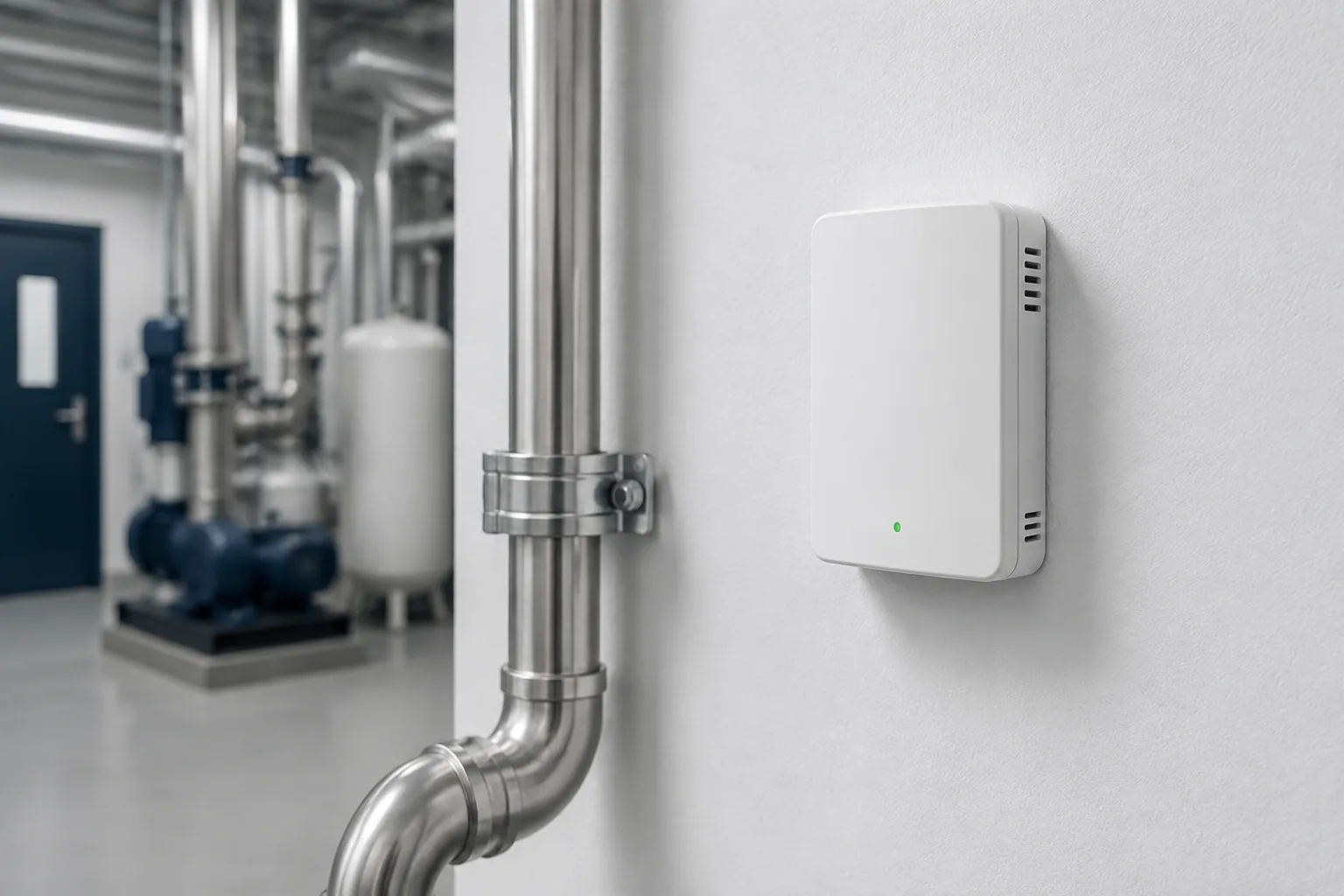
Environmental Monitoring
Know when conditions change.
Monitor temperature, humidity, water, and other conditions that matter to your facilities and operations.
Notice the change before the next walk-through.
Important changes do not always happen during business hours. e•iot helps businesses connect environmental sensors to useful information and alerts for storage areas, facilities, equipment rooms, and other operating environments.
A temperature drifts overnight or water reaches a normally dry space. Environmental monitoring can give your team another opportunity to recognize changing conditions in storage areas, equipment rooms, and facilities.
Connect the information to the people who can act.
Temperature range, sensor placement, calibration, connectivity, and record retention matter. Monitoring supports your operating procedures; it does not replace them or establish compliance.
Information your people can use.
Make the next
decision clearer.
View selected readings over time and send threshold-based notifications to the right people. Agree on an escalation and response process before relying on alerts in everyday operations.
Monitor conditions in storage, refrigeration-related environments, and critical rooms. Explore sensors for locations where water could disrupt equipment or building operations.
Discuss this solutionThe details make
the difference.
Temperature range, sensor placement, calibration, connectivity, and record retention matter. Monitoring supports your operating procedures; it does not replace them or establish compliance.
Designed around your environment
Sensor suitability, installation location, calibration needs, thresholds, and response procedures are important. Installing sensors alone does not establish regulatory compliance or guarantee product safety.
Planned as one project
e•iot connects requirements, technology sourcing, and the implementation path. We confirm provider availability, integrations, responsibilities, and support within the scope—so you know how the pieces fit together.
Good questions.
Clear answers.
Every project has its own details. Here’s a useful place to start.
Ask us about yoursPotentially. We evaluate the temperature range, sensor placement, installation conditions, and reporting requirements before selecting a solution.